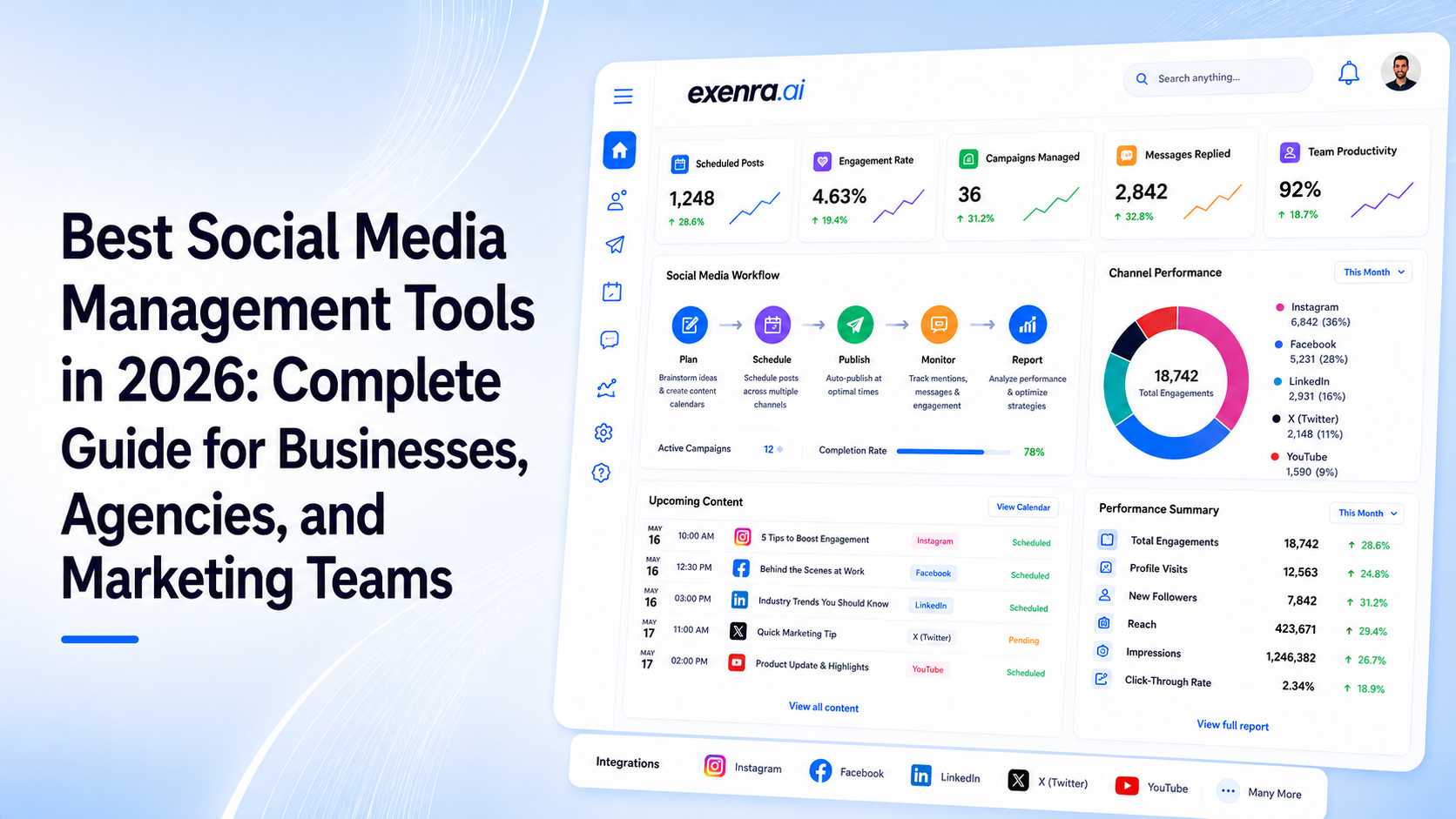
Social media has become one of the most important ways for businesses to connect with customers, build their brand, and generate new opportunities.
But managing social media is not as simple as publishing a post and waiting for results.
Businesses today need to:
Create regular content
Schedule posts across multiple platforms
Reply to customer messages
Track engagement
Analyze performance
Coordinate with marketing teams
Understand which campaigns are actually working
For a small business owner or marketing team, handling all of this manually can quickly become stressful.
You may have to switch between Facebook, Instagram, LinkedIn, TikTok, and other platforms every day just to publish content and respond to customers.
This is where social media management tools become useful.
These platforms help businesses manage their social media activities from one place, saving time and making marketing workflows more organized.
The best social media management tools do not only help with posting. They help businesses plan campaigns, improve teamwork, understand customers, and make better marketing decisions.
What Are Social Media Management Tools?
Social media management tools are software platforms that allow businesses to manage multiple social media accounts from a single dashboard.
Instead of logging into every platform separately, businesses can use one tool to handle activities like:
Creating content
Scheduling posts
Managing comments
Replying to messages
Tracking analytics
Planning campaigns
Collaborating with teams
In simple words, a social media management tool helps businesses stay consistent, organized, and efficient.
For example, a marketing team can prepare a week of Instagram and Facebook content, schedule everything in advance, assign approval tasks, and monitor results without switching between multiple platforms.
Why Businesses Need Social Media Management Tools
Many businesses struggle with social media not because they lack ideas, but because managing everything manually takes too much time.
Some common problems include:
Maintaining consistent posting
Businesses need regular content to stay visible.
Without scheduling, teams often miss posting days or publish inconsistently.
Managing multiple platforms
A company may have customers across:
Facebook
Instagram
LinkedIn
TikTok
X (Twitter)
Managing every platform separately becomes difficult.
Slow customer responses
Customers often send questions through social media.
If messages are missed or answered late, businesses can lose potential customers.
Poor team coordination
When multiple people manage social media, it becomes difficult to know:
Who created the content?
Who approved the post?
Who replied to the customer?
What is scheduled next?
Difficulty measuring results
Likes and followers are not enough.
Businesses need to understand:
Which content performs best
Which campaigns generate results
Which platforms bring valuable customers
Social media management tools help solve these challenges.
How Social Media Management Software Works
Most social media management platforms follow a simple process.
Step 1: Create and Plan Content
Teams prepare posts, captions, images, and videos.
Step 2: Schedule Posts
Instead of posting manually every day, content can be scheduled for specific dates and times.
Step 3: Manage Engagement
Comments, messages, and mentions can be monitored from one place.
Step 4: Analyze Performance
The platform collects data to show what is working.
Step 5: Improve Future Campaigns
Businesses use insights to create better content strategies.
Key Features of the Best Social Media Management Tools
The right platform should provide more than just scheduling.
Here are the most important features businesses should look for:
1. Social Media Scheduling
Scheduling is one of the biggest advantages of using management software.
Businesses can:
Prepare content ahead of time
Schedule posts automatically
Maintain consistency
Plan campaigns in advance
This saves hours every week.
2. Multi-Platform Management
A good social media tool allows businesses to manage multiple channels from one dashboard.
Common platforms include:
Instagram
Facebook
LinkedIn
TikTok
X
Pinterest
YouTube
This reduces the need to switch between different accounts.
3. Content Calendar
A content calendar helps marketing teams organize their strategy.
Teams can see:
Upcoming posts
Campaign schedules
Content gaps
Publishing timelines
This makes planning much easier.
4. Analytics and Reporting
A strong social media strategy requires data.
Analytics help businesses understand:
Engagement
Reach
Audience growth
Clicks
Campaign performance
Customer response
This helps teams focus on strategies that actually produce results.
5. Team Collaboration
Social media is usually managed by more than one person.
A good tool allows teams to:
Assign tasks
Review content
Approve posts
Share feedback
Manage responsibilities
This creates a smoother workflow.
6. Social Inbox Management
Customers often contact businesses through social media.
A unified inbox helps teams:
Reply faster
Track conversations
Manage customer questions
Improve customer experience
7. Automation Features
Modern social media tools use automation to reduce repetitive work.
Examples include:
Automatic publishing
Reporting
Notifications
Content workflows
Task reminders
Automation allows teams to spend more time on strategy.
Best Social Media Management Tools in 2026
Different businesses have different requirements.
Tool | Best For | Main Advantage |
|---|---|---|
Buffer | Small businesses | Easy scheduling and simple management |
Hootsuite | Large organizations | Advanced social media management |
Sprout Social | Enterprise teams | Analytics and customer engagement |
Later | Visual brands | Instagram-focused planning |
Planable | Agencies | Client approvals and collaboration |
SocialPilot | Marketing teams | Affordable multi-account management |
Canva Pro | Content teams | Design and publishing workflow |
Growing businesses | Marketing automation and workflow management |
Best Social Media Management Tools for Small Businesses
Small businesses usually need tools that are:
Easy to understand
Affordable
Time-saving
Simple to manage
Most small businesses struggle with:
Limited marketing resources
Creating enough content
Responding quickly
Tracking results
A good social media management platform helps small teams compete with larger brands by making their marketing process more efficient.
Best Social Media Management Tools for Agencies
Agencies manage multiple clients, which creates additional challenges.
They need:
Multiple account management
Client approvals
Team permissions
Reporting
Content calendars
Agency-focused tools help reduce confusion and create a professional workflow between teams and clients.
Social Media Management Tools vs Manual Social Media Management
Manual Management | Using Social Media Tools |
|---|---|
Posting separately on every platform | Schedule everything together |
Searching through messages manually | Manage conversations in one place |
Creating reports manually | Automated analytics |
Difficult teamwork | Organized collaboration |
More time spent on repetitive tasks | More focus on strategy |
How Social Media Management Tools Improve Business Growth
A good tool improves more than productivity.
It helps businesses:
Build stronger consistency
Regular posting keeps brands visible.
Improve customer relationships
Faster replies create better customer experiences.
Understand audience behavior
Analytics show what customers actually like.
Improve marketing decisions
Data helps businesses invest in the right channels.
How Exenra.ai Helps Businesses Go Beyond Social Media Management
Most social media management tools focus on publishing and monitoring content.
But businesses often need more than that.
They need to know:
Which customers are interested?
Which leads came from campaigns?
Who should follow up?
What happens after engagement?
Exenra.ai helps businesses connect marketing activity with business workflows.
It helps teams:
Manage leads
Automate follow-ups
Track customer interactions
Improve team accountability
Create connected workflows
This allows businesses to move from simply managing social media to managing the complete customer journey.
AI and the Future of Social Media Management Tools
Artificial intelligence is changing how businesses manage social media.
Modern platforms are adding:
AI content suggestions
Automated captions
Smart scheduling
Audience insights
Performance predictions
Automated workflows
The future of social media management is moving toward smarter automation where businesses can create better results with less manual effort.
How to Choose the Right Social Media Management Tool
Before selecting a platform, consider:
Your number of accounts
How many social profiles do you manage?
Your team size
Do multiple people need access?
Your reporting needs
Do you need simple analytics or detailed reports?
Your automation requirements
Do you only need scheduling, or complete workflows?
Your budget
Choose a tool that supports your current stage and future growth.
Common Mistakes Businesses Make
Choosing a tool only because it is popular
Every business has different needs.
Using too many platforms
Too many tools create unnecessary complexity.
Ignoring team workflow
The best tool should make daily work easier.
Not tracking results
Without analytics, businesses cannot improve.
Conclusion
The best social media management tools help businesses save time, organize marketing efforts, and improve customer engagement.
Whether you are a small business, agency, or growing company, the right platform can simplify content planning, publishing, collaboration, and reporting.
However, modern businesses need more than just social media posting.
They need connected workflows that help turn engagement into real business results.
That is where automation-focused platforms like Exenra.ai help businesses create a more complete marketing and customer management process.
FAQs
What are social media management tools?
Social media management tools are platforms that help businesses create, schedule, manage, and analyze social media content from one place.
Why should businesses use social media management software?
Businesses use these tools to save time, improve consistency, manage multiple accounts, and track marketing performance.
What is the best social media management tool for small businesses?
The best option depends on business needs. Small businesses usually prefer tools that are affordable, simple, and easy to manage.
Can social media management tools automate posts?
Yes. Most platforms allow businesses to schedule and automatically publish content.
Do social media management tools help generate leads?
They help improve engagement and marketing efficiency. For complete lead management, businesses often connect social media activity with CRM and automation systems.
What features should a social media management tool have?
Important features include scheduling, analytics, team collaboration, content calendars, automation, and reporting.
Are AI-powered social media tools better?
AI features can help businesses create content faster, analyze performance, and automate repetitive tasks.
Start your 7-day free trial with Exenra.ai and automate your first lead workflow without coding, Zapier, or an expensive CRM.